Image
Scaling Your Passive Income: Strategic Portfolio Building in Microstock
Read More
/02 Sep 2026



Grappict.com - Artificial intelligence has swiftly transitioned from a futuristic novelty into an indispensable utility across every sector of the digital creative industry.
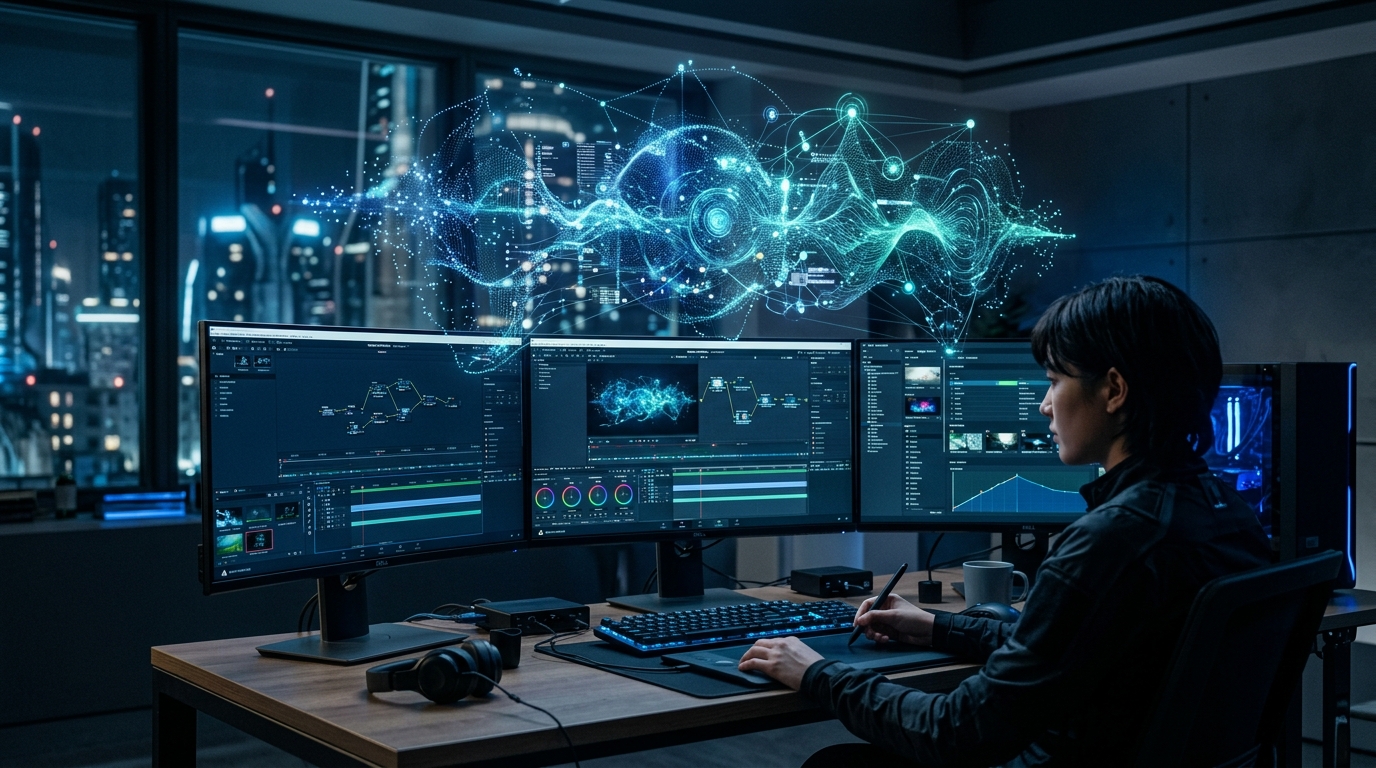
Within the microstock ecosystem, the integration of generative AI tools has ignited intense debates, platform policy shifts, and unprecedented workflow accelerations. Creators who once spent days rendering complex textures or illustrating background elements can now leverage AI to conceptualize assets at lightning speed, fundamentally transforming the production pipeline.
Major microstock agencies have adapted to this technological wave by establishing clear compliance frameworks for AI generated content. Platforms like Adobe Stock and Shutterstock now permit AI submissions provided they are explicitly tagged, meet rigorous technical resolution thresholds, and respect copyright boundaries. This integration allows contributors to expand their asset portfolios exponentially. Instead of manually sketching every concept, artists act as creative directors, prompting algorithms to generate raw concepts before refining them with vector editing software and custom typography.
Despite the massive efficiency gains, the influx of AI generated media has also intensified market saturation. With millions of new assets flooding search indexes daily, standing out requires distinct artistic direction, meticulous post-processing, and a deep understanding of niche market gaps. Creators who successfully blend human editorial oversight with AI production power are uniquely positioned to dominate the modern microstock landscape.